
Death to Alarm Fatigue with Triage360: An Interview with Jessica Queen, MSN, RN, APRN, FNP-C
At the bedside, if certain things don't happen, people die, Jessica Queen, MSN, RN, APRN, FNP-C, founder of Triage360 and CEO of Omedus Medical, emphasizes.
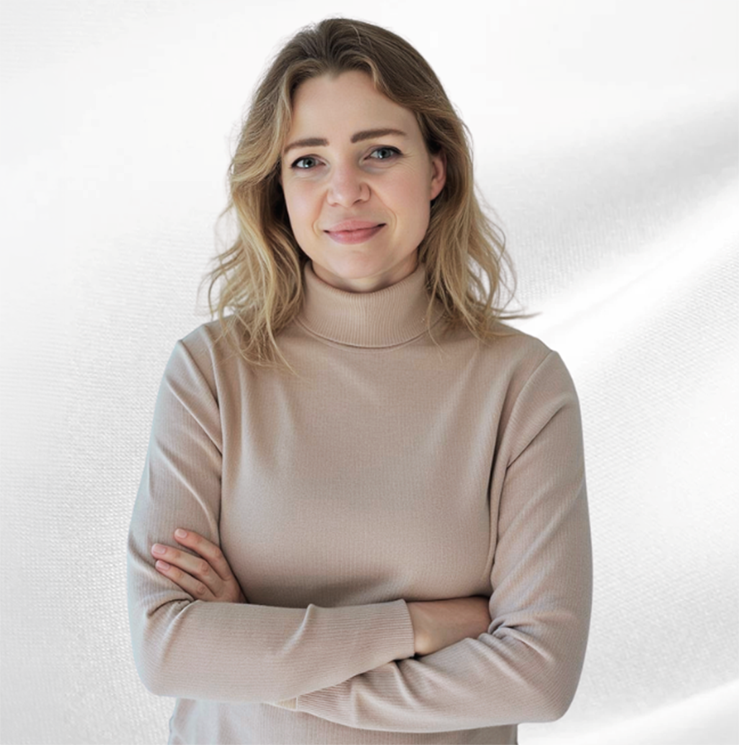 Queen saw this problem up close as a cardiology nurse. "Most nurses are terrified of missing something, and the patient going downhill. And during the COVID-19 pandemic, that became really bad. I'd walk into a room and find people dead because I didn't know they were going downhill." Determined to bridge that gap, Queen set out to transform her bedside experience into a life-saving biomedical device.
Learn more about how Queen created Triage360, the technology behind it, and how she thinks more nurses can nurture their entrepreneurial side.
Hacking the Hospital Floor
For Queen, her path to medical innovation didn't start in a coastal tech hub, but in the heart of the Midwest. A proud Nebraska native, she completed her undergraduate nursing education in Lincoln and then her Master of Science in Nursing (MSN) in Omaha and now leads her company from Omaha.
Queen's professional foundation began as a certified nursing assistant (CNA) at a rehabilitation center while still in nursing school. After graduation, she accepted her first nursing position at the same facility, working for a year before transitioning to cardiology, a specialty that would define her clinical career.
"I drove my managers crazy because I was always trying to create something to change how we were doing things," she reminisces. "I didn't realize I was an entrepreneur at the time." One of her first innovations came from noticing that her patients became weak while bedbound in the hospital. After noticing the problem, she contacted a Tai Chi provider from Australia, asking to use their videos in the hospital. "On days that I worked, I went around and offered five-minute sessions to patients. The doctors and anesthesia team started joining, too, and I also started to feel better from it."
Queen frequently served on innovation boards at the various hospitals she worked at, brainstorming everything from leveraging bedside whiteboards more effectively to improving labeling systems for IV tubing.
Bedside Instincts as Startup Skills
Though Queen always had an entrepreneurial spirit, she acknowledges that nurses often have a difficult time seeing themselves as innovators. "I often joke that the best innovators are those at the bedside. Literally, we innovate every single day. We have to convince our patients to take their medication or figure out how to get all our tasks done. It takes a little workaround sometimes to get everything accomplished."
Nurses have an amazing ability to see a problem, evaluate, and quickly execute a plan; Queen observes. But that ability often overlaps with innovation. "The reason people believed in me as an entrepreneur is that I had that skill set. I took information in, I made a decision, and I executed on it."
It can also be challenging for nurses to embrace an entrepreneurial identity because of a feeling of betrayal, Queen points out. "There is a lot of external pressure from other nurses who think that because you left the bedside, you don't care about people. But the truth is, an innovation can affect millions of people. Even at my best, I could only impact maybe a thousand people during my bedside career."
Wearables Without the Noise
As a nurse innovator and entrepreneur, Queen started Omedus, which she explains was inspired by combining the words "Omaha" and "Medical." Its flagship product, Triage360, on the surface appears like a vitals monitor, but it is also a powerful wearable monitoring device.
Triage 360 has a beacon that sits on a patient's chest and non-invasively measures vital signs. It also has a screen on it, showing vital signs and a single-lead ECG. All these data points flow to a centralized dashboard, where each nurse can pull up their patient load and quickly see who is stable, who is unstable, and how the situation is changing. On the dashboard, each patient has a brief information card, which will move order depending on how their vitals change. The device only sends updates when vitals are changing. "We have too many alarms already," Queen stresses, "I don't need to know your heart rate has been 70 bpm for the last five hours. I need to know if it's dropping steadily. There are no audible alarms. You don't always need that."
Anything from a mass casualty situation to an overcrowded emergency room to an inpatient unit would benefit from Triage360, Queen shares. "I don't want anyone to die simply because we didn't have visibility into what was going on in their overall health trajectory. I want to prevent the moral injury of nurses so they don't feel they need to leave the bedside."
Stop Sleeping on Your Startup Ideas
For nurses like Queen who buzz through the floor with workarounds and problem-solving ideas, Queen recommends nurturing your entrepreneurial side through the following:
- Accelerators. Think of an accelerator as a fast-track bootcamp for startups. These programs provide early-stage companies with intensive mentorship, networking, and resources to help founders refine their business model. "Accelerators were really the key for me," Queen says, "because they provided education, a network, and people who have already done what I'm trying to do and have the receipts." Queen joined a life science-specific accelerator program called Innosphere Ventures based in Fort Collins, Colorado. "They taught me about the Food and Drug Administration, prototyping, and enough information to go out and evaluate things.
- Mentors. Queen found mentors who helped other startups, which helped her prioritize what mattered most. "Having guidance opened my eyes to the fact that I had no idea what I was doing. But I have good people, and I know how to continue moving forward."
- Market research. Queen learned what types of questions to ask. Questions started as "How do you start a business?" and that led to "What would it take to get Triage360 to market?"
- Commitment. Entrepreneurship is like school, Queen says. "I often tell nurses that, like when you went to school, you were committing four years of your life to this. It's similar with a startup."
Final Thoughts
Some of the most impactful founders in the healthcare space don't always come from Silicon Valley or a boardroom, but from the chaotic realities of a 12-hour shift. Queen's journey to entrepreneurship shows that if you have a problem or an idea that keeps you up at night, you don't need to wait for anyone's permission. Start by asking, "How do you start a business?" And maybe you'll end up scaling a game-changing biomedical startup.
________________________________________
About the Author
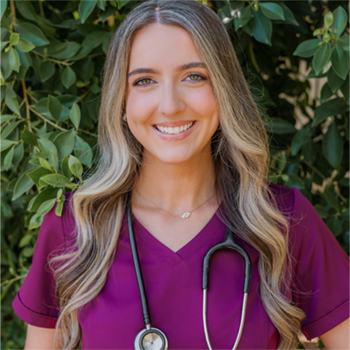 Payton Babb, BSN, RN, is a nurse, healthcare journalist, and creator of Bedside Dropout Nurse, an independent brand exploring nursing trends, workforce economics, and the culture of the profession. Her healthcare career has taken her from bedside and maternal-child nursing to utilization management, enterprise clinical project management, and operations leadership, giving her a perspective that spans both patient care and the systems behind it. Her writing has appeared in U.S. News & World Report, Nurse.org, The Nursing Beat, Nurse Fern, GoodRx, and other healthcare publications. Based in Tucson, Arizona, Payton writes about the people, ideas, and forces shaping modern nursing.
When she's not writing in the third person, she's usually at the piano or plotting her next outdoor adventure.